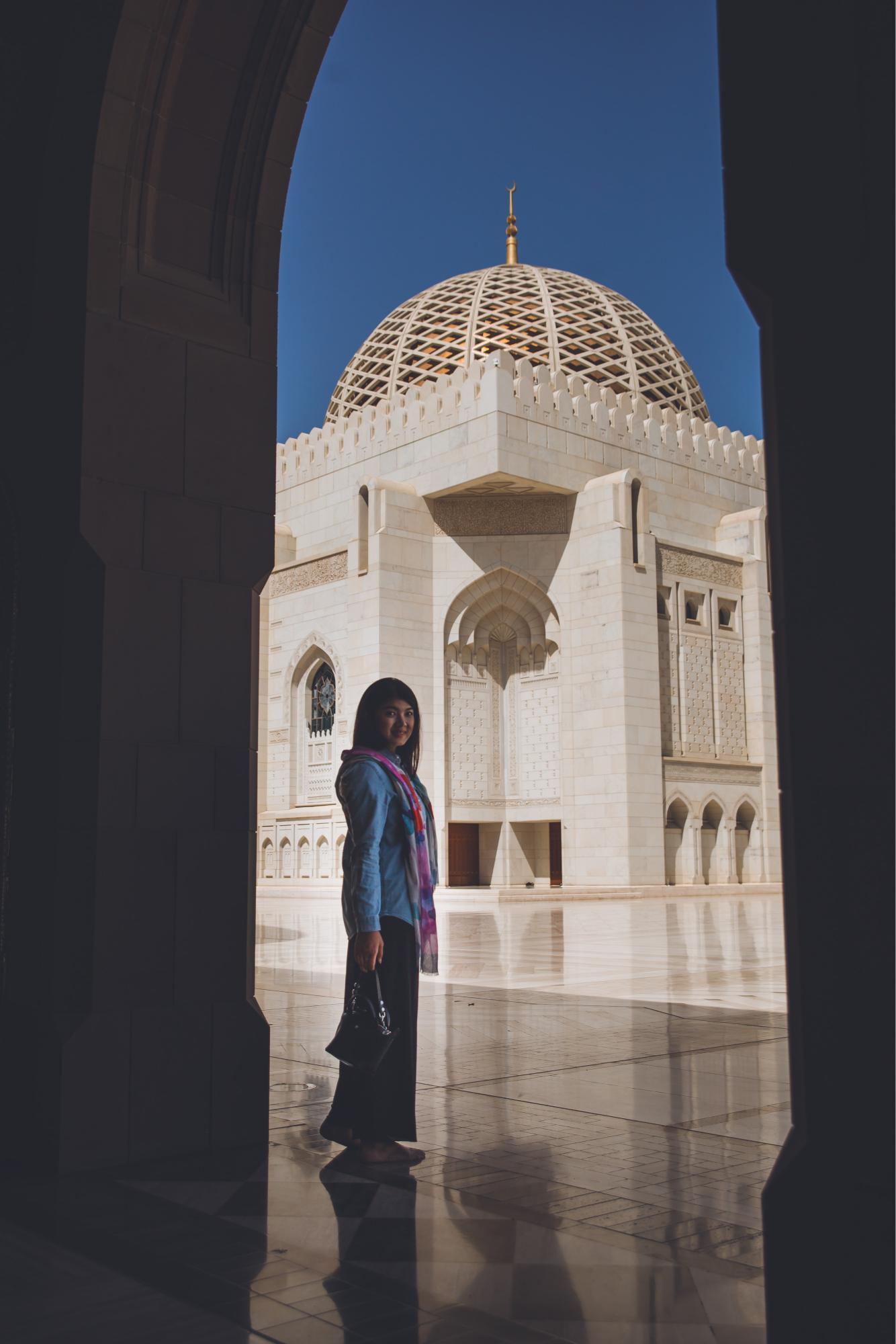
Jebel Akhdar and the Grand Mosque sit at opposite ends of what Oman can feel like. One is a high plateau of stone-walled terraces, narrow village paths and cool air; the other is a wide, ordered complex of marble, arches and open courtyards in the middle of the capital. Put together, they make a surprisingly satisfying pair, especially if you do the mountain first and let the mosque be the calm, reflective close to the trip.
Why pair a mountain trip with the Grand Mosque?
Because the two days complement each other in pace and in atmosphere. The mountain leg is about driving, walking and being outdoors in changeable conditions. The mosque visit is slow and contained: you move through courtyards and halls at your own speed, there's shade to stop in, and almost nothing to plan once you've arrived. Most visitors find that after a day or two of uneven paths and winding roads, a visit like this feels like an easy reset rather than another item to tick off.
If you want the mountain side in more detail, Jebel Akhdar: Oman's Green Mountain Villages and Terraced Orchards covers the villages and the practicalities of getting up there.
How should you plan the drive back down?
Leave the mountain with a comfortable buffer rather than racing to a fixed appointment. The road down to the Muscat area takes a couple of hours, and it's easy to underestimate how much slower a day feels after an early start in the hills. A sensible approach is to treat the mountain checkout as the morning's main event, have a relaxed lunch on the way, and keep the afternoon free. That way the mosque visit is something you can settle into, not something you're hurrying toward.
If you'd rather not combine the two on the same day, that works too. Many travellers prefer to check into their Muscat hotel, rest, and visit the mosque the next morning when they're fresh.
When is the best time to visit the Grand Mosque?
Mornings are typically the most comfortable time to visit, and the softer light later in the day is often the most photogenic. Visiting arrangements, hours and any closures can change, particularly around prayer times and religious occasions, so check the current visiting information before you go rather than relying on a fixed schedule. For a deeper look at how the light behaves across the courtyard through the day, Best Time for Golden Hour Photos at the Grand Mosque goes through it in detail.
What should you wear after a mountain trip?
Modest, loose and covering: shoulders and knees covered for everyone, and for women a headscarf, as is the usual expectation at the mosque. Sleeves and long trousers or skirts are the simple rule. This is where a mountain packing list can actually help you, because the long-sleeved layers you needed on Jebel Akhdar's cooler mornings and evenings are often exactly the kind of thing that works at the mosque too. Choose light, breathable fabrics, since the courtyard can feel warm, and keep a dedicated clean outfit aside rather than wearing the same dusty hiking clothes you had on the mountain road.
Comfortable shoes you can slip off easily are also useful, since you'll typically be removing them at certain points.
Making the most of the architecture
The Sultan Qaboos Grand Mosque rewards slowing down. The repeating arches, the long colonnades and the open marble courtyard create strong lines and symmetry that look good in almost any light, and the shade along the covered walkways gives you somewhere to pause when midday gets bright. A few things tend to help:
- Arrive with time to wander before you think about photos.
- Look for repeating arch lines and reflections in the polished surfaces.
- Keep your own camera or phone use respectful, particularly near anyone praying.
Those arches and long corridors are also where portraits tend to work best. Imran, the photographer behind Muscat Portraits, regularly shoots here with couples, families and solo travellers, and the architecture does most of the work: simple, modest clothing against pale stone looks elegant without any styling.
Does it make sense to add a second Muscat stop?
Yes, if you have the energy, but keep it light. The corniche and market area at Muttrah Corniche & Souq is a natural evening follow-up, with a more lively, bustling feel that contrasts nicely with the quiet of the mosque. Resist the urge to fit in more than one extra stop. After a mountain trip, the best finishes are the ones with room to breathe.
A simple way to structure the final two days
- Day one: Drive down from Jebel Akhdar at an easy pace, check in, rest, and have a relaxed dinner.
- Day two, morning: Visit the Grand Mosque while it's comfortable and the light is soft.
- Day two, evening (optional): A stroll along the Muttrah waterfront before your flight or final night.
Booking a portrait session at the mosque
If you'd like your mountain-to-mosque trip captured professionally, a short portrait session at the Grand Mosque fits neatly into the final day, and Imran can help you plan timing around your dress, travel plans and the light. Message on WhatsApp at +968 9584 2090 with your dates, and you can also see packages and pricing before you get in touch.
Ready to book your Muscat session?
Message on WhatsApp for availability during the September–January season.
Message on WhatsAppOr call/text +968 9584 2090 directly