Every June through September, Oman's southern region around Salalah turns green. The khareef, a monsoon current that rolls in off the Arabian Sea, wraps the Dhofar mountains in fog, waterfalls, and a kind of lush landscape that feels completely out of place in the Gulf. It's become one of the most talked-about seasonal draws in the country, pulling in visitors from across the region who want to see mist rolling over hills that spend the rest of the year bone dry.
What a lot of first-time visitors don't plan for is the layover. Salalah's airport handles far fewer international routes than Muscat's, so most itineraries — whether flying in from abroad or connecting domestically — pass through the capital first. That connection is often treated as dead time: a few hours in an airport lounge, maybe an overnight before an early flight south. It doesn't have to be. Muscat rewards even a short stop, and if the trip is already built around photos of Salalah's green season, it's worth carrying a camera through the capital too.
Is Muscat worth stopping in on the way to Salalah?
Yes, if the connection allows even half a day. Muscat and Salalah are different enough in character — one coastal-desert and monumental, the other green and mountainous during khareef — that seeing both gives a far more complete sense of Oman than either alone. A single evening in the capital is enough to fit in one well-chosen photo location without disrupting the rest of the trip.
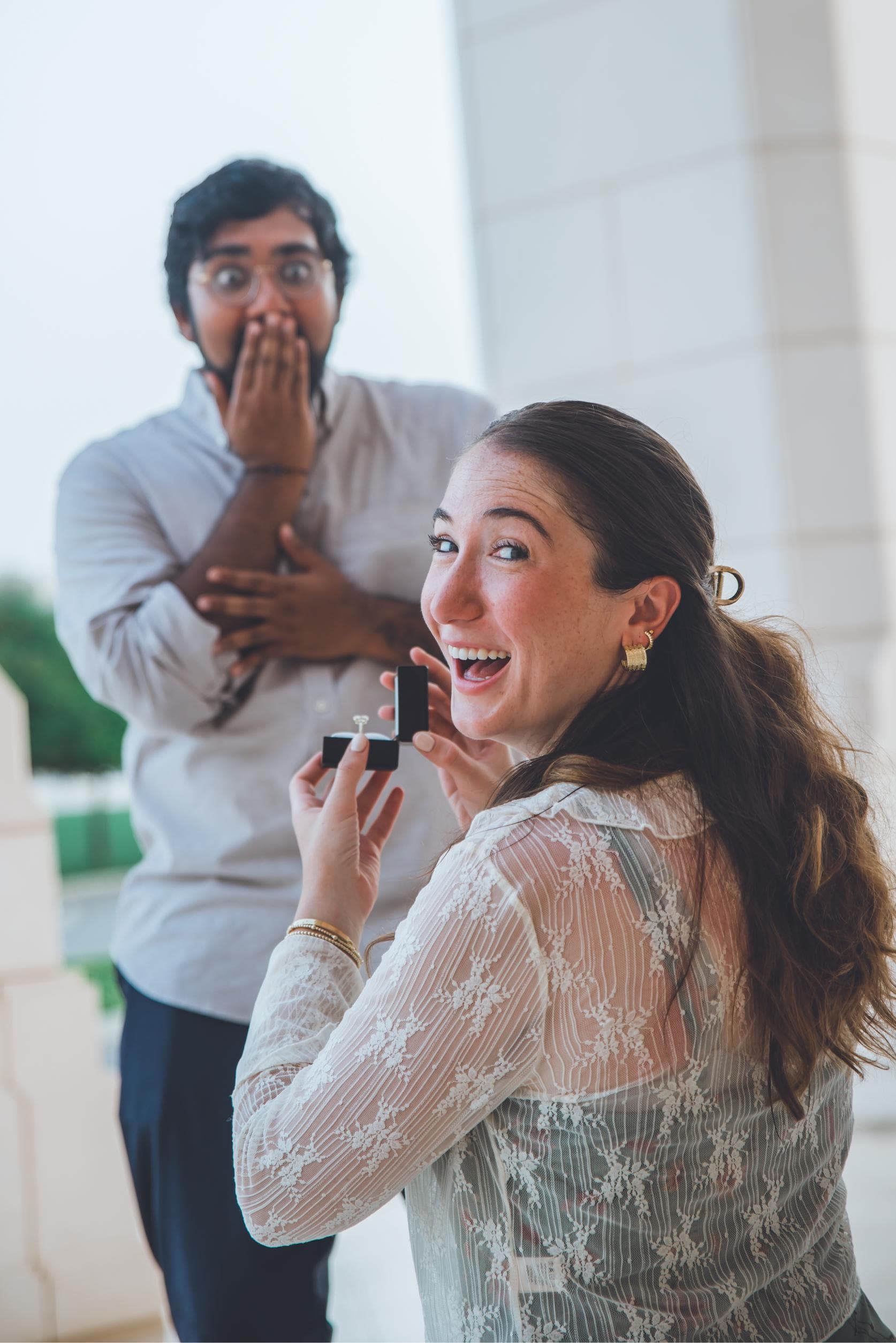
The trick is picking a location that works regardless of what time your connecting flight lands. Daytime spots like the Sultan Qaboos Grand Mosque close to visitors outside a fairly narrow morning window and require modest dress, which is easy to plan for but hard to improvise around an unpredictable layover. The Royal Opera House Muscat is more forgiving — its colonnades and surrounding plazas are accessible in the evening, which lines up naturally with a late afternoon arrival or a stop before a red-eye connection south.
Why the Opera House works for a short Muscat stop
Its covered colonnades and warm stone catch the last hour of daylight well, and the architecture reads as distinctly Omani without needing the timing precision that outdoor desert or coastal shoots demand. For a traveler with a few hours between flights, that flexibility matters more than a perfect golden-hour window ever could. Arriving an hour or so before sunset still leaves time for a relaxed session before dinner, and the plazas stay comfortable well into the evening once the day's heat has faded.
If the layover happens to fall earlier in the day, Muscat's public beaches at Qurum are a reasonable alternate — easier to reach on short notice and forgiving of a looser schedule, even if the light isn't quite as dramatic as sunset at the Opera House.
What the khareef actually looks like, briefly
Travelers heading south should know the khareef is a genuine climate shift, not just marketing: low cloud and drizzle settle over the Dhofar mountains for weeks at a time, turning normally brown hillsides green and bringing temperatures noticeably cooler than the rest of the country experiences in summer. It's popular enough that Salalah's roads and viewpoints get busy during the peak weeks, so anyone building a trip around it should expect a livelier, more touristed version of the region than in the shoulder months either side.
None of that changes what makes Muscat worth a stop on the way there or back. If anything, the contrast helps: a set of portraits against the Opera House's pale stone and clean lines gives a trip built around Salalah's mist and greenery a second, very different visual note — proof of the range a single Oman trip can cover in a matter of days.
Does Muscat get the khareef too?
No — the khareef is specific to Dhofar and doesn't reach as far north as Muscat. The capital keeps its usual summer pattern through those months: hot, dry, and clear, which is part of why the two stops photograph so differently on the same trip. Travelers sometimes assume the cooler, misty conditions they've read about for Salalah will carry over to the rest of the itinerary, then find Muscat's evenings are warm and the skies are open rather than overcast. It's worth packing for both climates separately rather than assuming one wardrobe will cover the whole trip — lighter, breathable layers for Muscat's heat, and something slightly warmer for the drizzle and wind up in the Dhofar mountains.
That contrast is also what makes photographing both worthwhile rather than redundant. A khareef trip tends to produce soft, diffused, green-toned images from the fog and cloud cover; a Muscat stop the same week gives clear evening light, sharp architectural lines, and warm stone tones. Put side by side, the two sets of photos read less like two random stops and more like a deliberate portrait of how varied Oman's geography actually is over a fairly short distance.
Building it into the itinerary
For travelers connecting through the capital, the easiest approach is to treat the Muscat leg as its own short session rather than an afterthought squeezed around flights. A late-afternoon arrival, an hour or so at the Opera House around sunset, and dinner nearby before continuing south (or heading to the airport) keeps things simple without adding a full extra day to the trip. Anyone weighing whether a longer stay in Muscat is worth it beyond that single stop can find more on timing trade-offs in this guide to one-day versus multi-day photography itineraries in Muscat.
Booking ahead matters more for a layover than for a standard trip, since flight schedules can shift and there's less flexibility to reschedule around a delay. A short window is still workable, but it helps to flag the time constraint upfront when arranging a session.
Planning a Muscat stop around your khareef trip
If a Muscat layover fits somewhere in your Salalah plans this khareef season, it's easy to build a short Royal Opera House session around it — see packages and pricing for what a session typically includes, then message +968 9584 2090 on WhatsApp to check availability for your travel dates and lock in a time that works around your connection.
Ready to book your Muscat session?
Message on WhatsApp for availability during the September–January season.
Message on WhatsAppOr call/text +968 9584 2090 directly