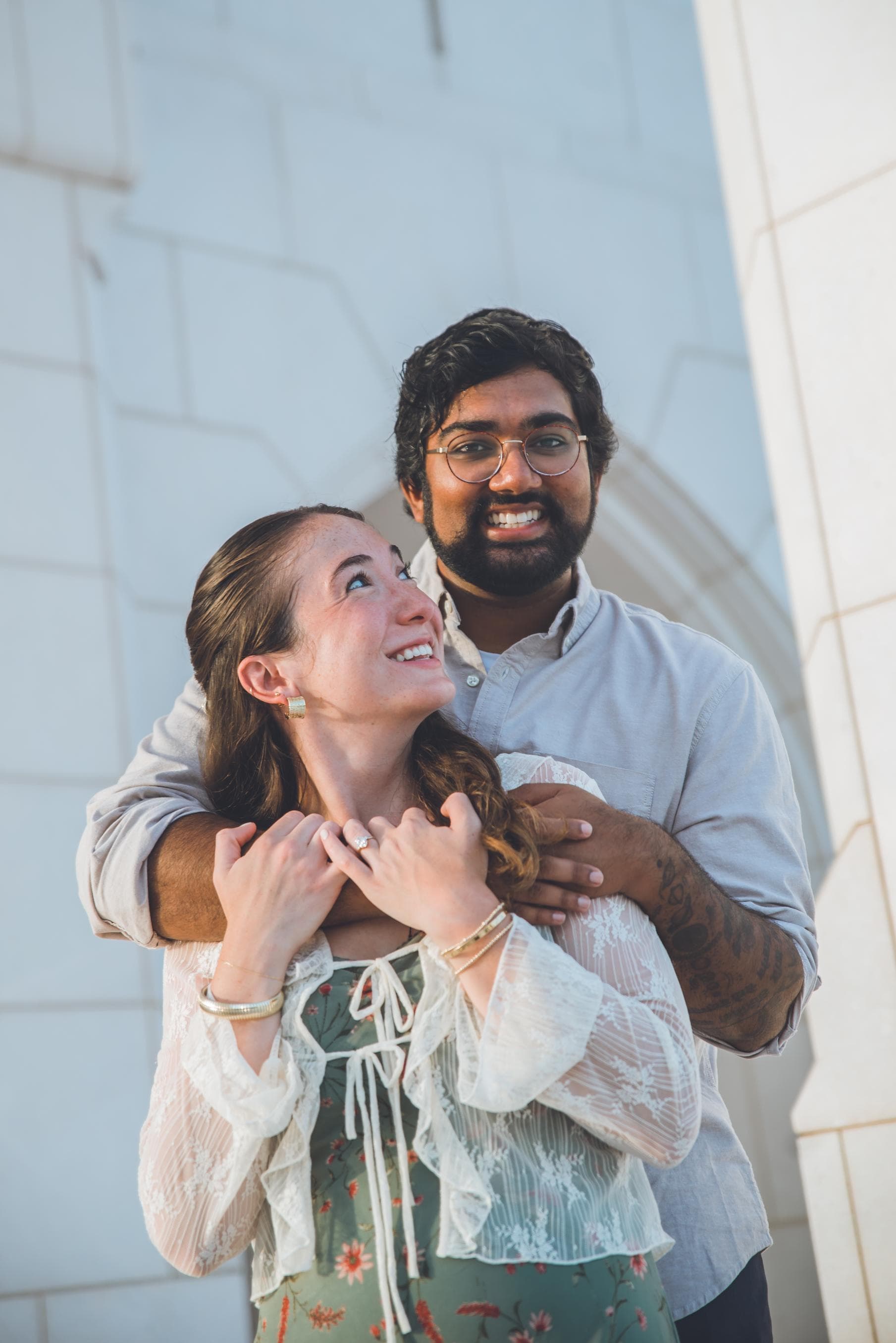
Muscat rewards visitors who look at it in layers. In the old walled quarter by the harbour, restored gates, rock-top forts, and a brightly pillared ceremonial palace give you the older shape of the city. Across town, the Royal Opera House offers something almost opposite: pale stone colonnades, tidy gardens, and a formal, modern elegance. Putting the two into one day is easy enough by car, and the contrast between them is the whole point.
What does a morning in Old Muscat involve?
A visit to Old Muscat is short and easy: most visitors find 45 minutes to an hour is enough to walk through the gates, take in the plaza in front of Al Alam Palace, and look up at the two forts flanking the harbour. Al Alam is a working ceremonial residence rather than a museum, so the experience is about the setting and the approach, viewed from the plaza, rather than touring an interior. Photography from public areas is generally fine, though it's sensible to stay mindful around security personnel and barriers near the palace itself.
Mornings tend to be the better time to go. The quarter has limited shade, the light on the palace's colored pillars is typically softer before midday, and it's usually quieter. For a closer look at the area, our walking guide to Old Muscat's gates and Al Alam Palace covers the layout in more detail.
Why pair it with the Opera House?
The pairing works because the two places want different things from the day. Old Muscat is a morning stop: compact, unhurried, and best before the heat builds. The Opera House is an evening stop. Its stonework generally warms toward gold in the last stretch before sunset, the plaza crowds thin, and the repeating arches of the colonnade catch the low light at an angle. Between the two you have a natural midday gap for lunch, a rest at the hotel, or a change of clothes, which is useful if you're planning a portrait session rather than just sightseeing.
How should you spend the middle of the day?
The simplest approach is to leave it loose. After Old Muscat, many travelers head back to their hotel or stop for lunch somewhere air-conditioned, particularly outside the cooler winter months. If you'd like a little more to do, the harbour-side walk toward Muttrah's corniche and souq is close by and works well as a gentle, shaded-in-places afternoon wander. Either way, aim to be back at the Opera House roughly ninety minutes before sunset, which is when the light there tends to be at its most flattering.
Is there a dress code at either stop?
Neither stop has the formal dress requirements of a mosque visit, but modest dress is a sensible default around government and royal buildings in Old Muscat. The Opera House plaza and colonnades are open public space, so the outfit question there is mostly about what photographs well. Simple, uncluttered clothing in solid colors tends to look best against the arches and clean stone lines. If you're planning to shoot at both places, wear something comfortable enough for a morning of walking that still works for the evening, or pack a change.
Evenings with a scheduled performance can bring extra foot traffic and tighter parking near the Opera House, so it's worth checking the schedule or choosing an earlier slot within the golden-hour window.
Photographing two very different backdrops
In Old Muscat, the pillars of Al Alam Palace, with the forts and water behind, give a layered, historic look that's quite unlike anything else in the city. Wide framings that include a person against the pillars and the harbour tend to show the scale best. At the Opera House, the appeal is symmetry: the front colonnade, the side arches where late light rakes across, and the open plaza for wider shots. If you want to know how that evening light behaves in more detail, our guide to golden hour portraits at the Royal Opera House Muscat goes through it.
Because the Opera House is easy to reach and reliably flattering in the late afternoon, most travelers treat it as the main portrait session of the day and use Old Muscat as the sightseeing stop, with a few quick frames at the plaza if time allows. As a photographer, I'm happy to build a short Old Muscat stop into a session when travelers want that historic backdrop alongside the more polished Opera House look, though it works best as a brief addition rather than a full second shoot.
Planning the logistics
Taxi or rental car is the easiest way to move between the two, as neither is set up well around public transit. Old Muscat has limited parking, so expect a short walk in, while the Opera House area generally has more room, though that can tighten on performance nights. Leave a little buffer between the two stops rather than scheduling them back to back, since Muscat traffic can slow things down at certain times of day.
If a day like this suits your trip, message me on WhatsApp at +968 9584 2090 with your travel dates and I'll help time an Opera House session around your Old Muscat morning. You can also see packages and pricing for the options.
Ready to book your Muscat session?
Message on WhatsApp for availability during the September–January season.
Message on WhatsAppOr call/text +968 9584 2090 directly