Most visitors land in Muscat with only a rough sense of how long they'll actually spend in the old harbour district, and Muttrah is usually the area that gets shortchanged when a day runs long elsewhere. That's a shame, because the corniche and souq reward unhurried time more than almost anywhere else in the city. Here's a realistic way to think about how much of Muttrah fits into a single day versus what a longer stay opens up, and where a photo session sits comfortably in either plan.
How much of Muttrah can you see in one day?
A focused morning or late afternoon is enough to get a genuine feel for Muttrah, but not enough to see it slowly. Two or three hours lets you work through the covered souq's main alleys, walk a decent stretch of the corniche past the moored dhows, and still leave time to sit somewhere with a coffee and watch the harbour traffic. What you won't get on a single fast pass is the wandering-and-doubling-back that turns up the smaller spice stalls and quieter side alleys, since those tend to reveal themselves only once you've stopped rushing toward a specific endpoint.
If Muttrah is one stop among several in a single Muscat day, it works best scheduled at the edges — early morning before the souq gets busy and the heat builds, or the last couple of hours before sunset when the light over the harbour turns warm and the day's crowds have thinned. Squeezing it into the middle of a packed midday schedule tends to shortchange both the souq (hot and crowded) and the corniche (flat, harsh light).
Building a one-day itinerary around Muttrah
If Muttrah is your main focus for the day, start at the souq while it's still cool and relatively quiet, then move out to the corniche as the morning light softens rather than saving both for the same narrow window. A late-afternoon return to the waterfront ahead of sunset gives a second, different look at the same stretch of coast — the dhows and watchtowers pick up color as the light lowers, which is a noticeably different mood from the same view at midday.
For travelers building a fuller single-day loop around the city, Muttrah tends to sit naturally in the middle of the day between a morning stop at the Sultan Qaboos Grand Mosque and an evening close at the Royal Opera House, whose colonnades photograph best once the heat has eased. That sequencing roughly follows how the light and crowds move through Muscat over a single day, and it avoids crossing back over the same ground more than necessary.
When a multi-day trip makes more sense
A second day changes what Muttrah can offer considerably. Rather than treating the souq and corniche as one combined stop, a multi-day trip lets you split them — a relaxed souq morning on one day, and a dedicated golden-hour session on the corniche on another, without either one feeling rushed to make room for the rest of the city. It also opens up returning to the souq at a different time of day than your first visit, since the alleys genuinely look and feel different depending on the light and how busy the stallholders are.
Extra days also give more room to work around Oman's heat, which can make even a short outdoor stretch demanding for much of the year. Rather than locking Muttrah into whatever window happens to be free on a single busy day, a multi-day trip means you can wait for a cooler morning or a clearer evening sky before committing to it.
What's the best time of day to photograph Muttrah?
Early morning and the hour or so before sunset are consistently the strongest windows, for similar but different reasons. Morning gives soft, even light in the souq's alleys and a calmer corniche before the day's foot traffic builds. The pre-sunset window brings warmer color over the water and the dhows, plus enough golden light spilling into the souq's entrances to make for a genuinely different set of photos than the same spots at midday.
Where a photo session fits in
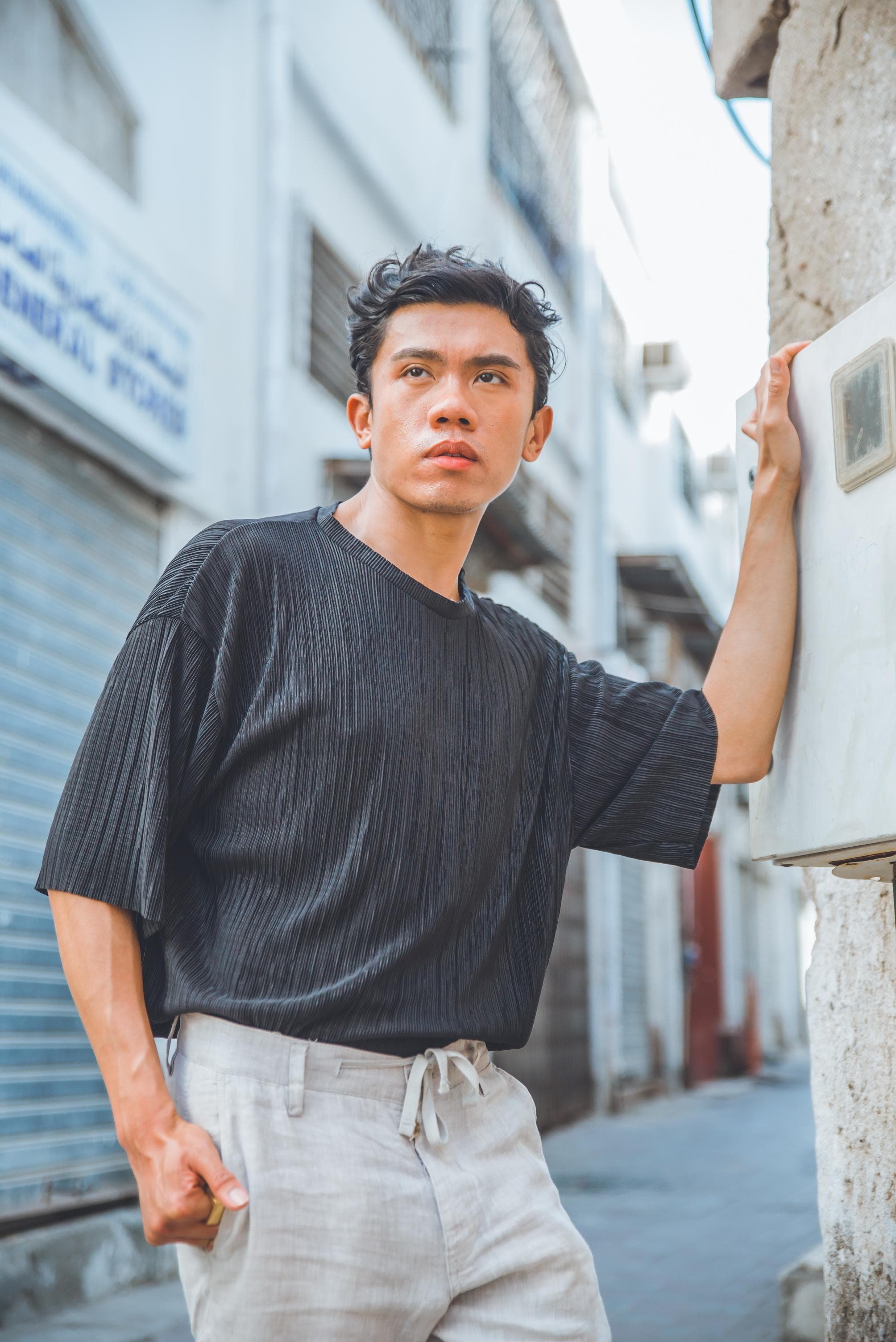
Because Muttrah's character shifts so much between morning and late afternoon, it's one of the more flexible locations to build a session around regardless of how the rest of your Muscat time is structured. On a single, packed day, it often works best as the closing stop — arriving as the light softens toward evening, with the souq and corniche both already familiar from earlier in the day. On a multi-day trip, there's more freedom to treat the session as its own outing entirely, timed for whichever morning or evening looks clearest rather than fitted around anything else.
For a broader look at how to divide your time across the whole city rather than just this one district, our guide to planning a one-day versus multi-day Muscat itinerary covers how the Grand Mosque, Muttrah, and the Opera House fit together across a longer stay.
If you're still working out whether Muttrah gets a morning, an evening, or its own dedicated day, message me on WhatsApp at +968 9584 2090 with your travel dates and I can help find a session time that suits the rest of your itinerary rather than competing with it — see packages and pricing for session options.
Ready to book your Muscat session?
Message on WhatsApp for availability during the September–January season.
Message on WhatsAppOr call/text +968 9584 2090 directly