Most of Muscat's sights are flexible about when you show up. The Sultan Qaboos Grand Mosque is not. Its visiting hours for non-Muslim tourists are restricted to a set morning window, closed entirely on Fridays, and that single constraint has more influence over how a Muscat itinerary should be built than any other factor in the city. Once you accept that the mosque sets the schedule, the rest of the day — or the rest of the trip — tends to fall into place around it rather than the other way around.
Why the mosque should come first, not last
The instinct on a new trip is often to ease into sightseeing and save the "big" landmark for later in the day. With the Grand Mosque, that instinct works against you. The visiting window closes by late morning, the courtyard fills up steadily from opening, and there's no equivalent afternoon or evening slot to fall back on if you miss it. Treating the mosque as the fixed anchor of the morning — rather than a flexible stop to slot in whenever — is what keeps the rest of the itinerary from being built around a mistake.
This matters even more if you're only in Muscat for one day. A single missed morning at the mosque generally means missing it altogether for that trip, since most itineraries don't have room to double back.
What a one-day itinerary looks like with the mosque as the anchor
If you only have one day, start there. Arriving close to opening gives the softest light, the smallest crowds, and the most breathing room to actually take in the scale of the courtyard rather than shuffling through it. From there, a day typically moves toward Muttrah's Corniche and souq by midday, when the covered alleys offer shade from the midday heat, and closes with the Royal Opera House or the surrounding Old Muscat streets in the late afternoon once the light has softened again. That sequence isn't arbitrary — it follows the mosque's fixed morning window, the shade available at midday, and the west-facing light that suits the Opera House best toward evening.
How much time should you actually set aside at the mosque?
Most visitors get a genuinely useful visit in 45 to 60 minutes before the courtyard fills up and the light flattens out. That's enough time to see the main courtyard, the surrounding colonnades, and the reflecting pools near the entrance without feeling rushed — but it's a tighter window than most first-time visitors expect, especially if photos are part of the plan. Building in a little extra time at the start of the day, rather than scheduling the mosque as one stop among several with no slack, tends to make this part of the trip feel far less hurried.
When multi-day changes the equation
With two or three days instead of one, the mosque's fixed hours matter just as much, but the pressure around them eases considerably. Rather than needing the mosque, the souq, and the Opera House to all happen on the same morning-to-evening arc, a multi-day trip can give the mosque its own unhurried morning and push everything else to a different day. That extra flexibility also opens up day trips further afield — Nizwa's fort and market, or the coastal stretch around Bar Al Jissah, become realistic without competing for time against the mosque's morning-only window.
Multi-day trips also give more room around Oman's heat generally. Muscat afternoons can be intense for much of the year, and having more than one day means you're not locked into a single outdoor window for everything on the list.
Where a photo session fits into either version
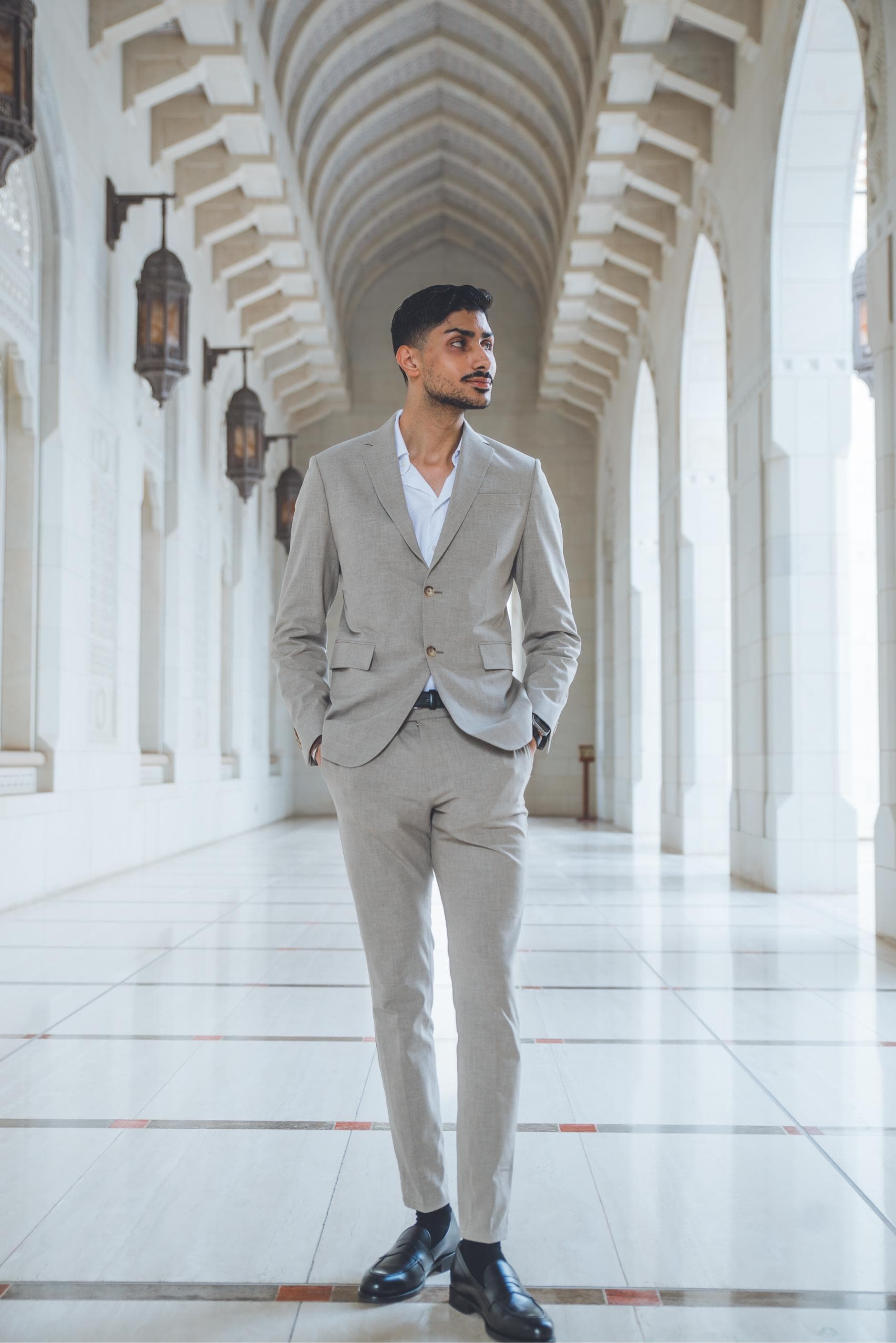
Because the mosque's light and access both work in your favor for a short stretch after opening, this is the part of a Muscat trip most worth having a local photographer for — someone who already knows where the morning light lands on the marble and the colonnades, rather than spending half a short visit figuring it out. On a one-day itinerary, this usually means the session happens first, before the rest of the day's sightseeing. On a multi-day trip, it's often easier to give the mosque session its own morning entirely, separate from the souq or the Opera House, so there's no need to rush the outfit or the light. For more on what tends to photograph well against the mosque's marble and how the morning light moves across the courtyard, see Best Time for Golden Hour Photos at the Grand Mosque.
Building your itinerary around it
Whether your Muscat trip is a single day or spread across several, the mosque's fixed morning hours are the one piece of the schedule that doesn't bend — so it's worth deciding early where it sits before filling in the rest. Message on WhatsApp with your travel dates and how many days you have in Muscat, and I can help find a morning slot at the Grand Mosque that anchors the rest of your itinerary instead of competing with it. See packages and pricing for session options.
Ready to book your Muscat session?
Message on WhatsApp for availability during the September–January season.
Message on WhatsAppOr call/text +968 9584 2090 directly